
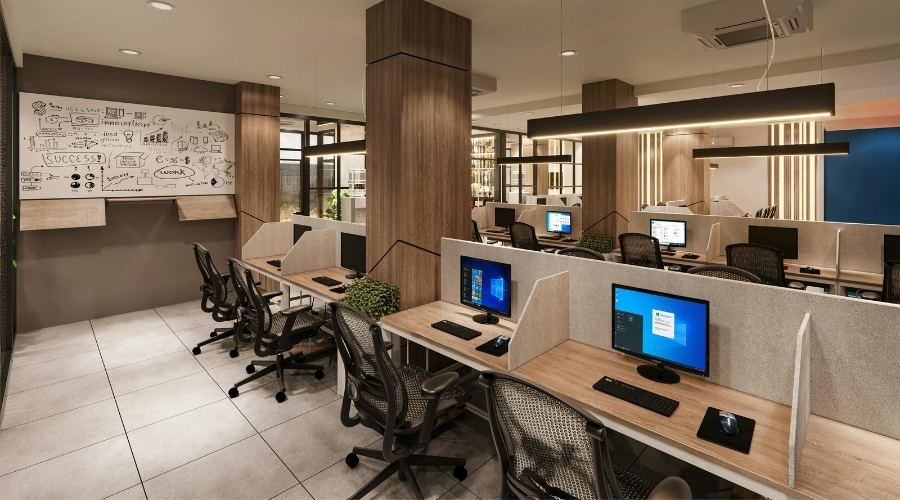
Walk into any modern building and you’ll see the shift immediately.
Lights adjust automatically. Doors unlock with credentials. Sensors track occupancy, air quality, temperature, movement. Security systems run continuously in the background. Conference rooms sync instantly.
It all feels seamless.
Behind the scenes, it’s anything but.
Today’s buildings are packed with hundreds, sometimes thousands, of connected devices. Many organizations are discovering the same problem: their existing network infrastructure was never designed to support the density, scale, and continuous communication requirements of modern smart building environments.
What Is a Dense Device Environment?
A dense device environment is a facility where hundreds or thousands of connected devices operate simultaneously across the same network infrastructure.
In smart buildings, these devices often include:
- Occupancy sensors
- HVAC controls
- Security cameras
- Access control systems
- Smart lighting
- Environmental monitoring systems
- Workplace analytics platforms
- Conference room technologies
- Building automation systems
Unlike traditional office networks, smart building environments generate constant background communication between devices, cloud platforms, and management systems.
That creates a completely different level of network demand.
Smart Buildings Aren’t Just Smart, They’re Demanding
A smart building isn’t defined by one system. It’s defined by how everything works together.
Energy management systems optimize consumption in real time. Access control and surveillance platforms secure the environment. Workplace analytics tools track how space is used. Predictive maintenance systems flag issues before they escalate.
Every one of these systems depends on continuous, always-on connectivity.
Not sometimes, and not when it’s convenient. Always.
That’s the part that gets underestimated.
Because while the technology layer keeps evolving, the network layer often gets left behind.
Why Smart Buildings Create New Network Challenges
Traditional enterprise networks were designed for laptops, smartphones, and predictable user behavior.
Smart buildings change that entirely.
Instead of intermittent traffic patterns, modern facilities now support:
- Thousands of persistent device connections
- Continuous real-time communication
- High-density wireless environments
- Multiple protocols and vendors
- Constant cloud synchronization
- Low-latency operational systems
As more devices come online, network congestion, performance bottlenecks, and reliability issues become increasingly common.
The result is often:
- Slow or inconsistent Wi-Fi
- Devices randomly disconnecting
- Delayed automation responses
- Poor system interoperability
- Increased troubleshooting demands for IT teams
In many cases, the problem is not the devices themselves. It is the network architecture underneath them.
The Real Problem Isn’t the Devices
When performance starts slipping, most teams look at the endpoints first.
They shouldn’t.
The real issue is what’s happening underneath:
- Thousands of connected devices sharing the same wireless environment
- Multiple platforms and vendors operating simultaneously
- Constant communication between devices, cloud platforms, and building management systems
That’s a completely different level of network demand than what most environments were built for.
And the symptoms show up fast:
- Slow or unreliable Wi-Fi
- Devices randomly dropping offline
- Inconsistent system performance
- Friction when onboarding new technologies
At that point, it’s easy to blame the devices.
But in most cases, the architecture is the problem.
Where Traditional Network Design Breaks Down
Legacy networks were built for a different era.
They were designed to support laptops, smartphones, and a predictable number of users. Bandwidth demand was intermittent. Device counts were manageable. Traffic patterns were simple.
Smart buildings change all of that.
Now you’re dealing with:
- Persistent device connections that never turn off
- High-density environments with constant background traffic
- A mix of protocols, vendors, and system requirements
It’s not just more traffic. It’s different traffic.
And when networks aren’t designed for it, the impact spreads quickly:
- Building automation becomes inconsistent
- Security systems lose reliability
- IT teams spend more time troubleshooting than innovating
This is where many organizations get stuck. They try to scale old infrastructure to meet new demands.
It doesn’t work.
The Operational Impact of Poor Connectivity
This isn’t just an IT issue. It’s an operational one.
When connectivity breaks down, it hits everything tied to the building:
- Security cameras lag or drop feeds
- Access control systems delay or fail
- Smart lighting doesn’t respond as expected
- Occupancy tracking becomes unreliable
- Conference rooms stop cooperating right when they’re needed most
What should be a smart environment turns into a reactive one. And that friction adds up, for IT teams, for facilities, and for the people using the space every day.
Why High-Density Wireless Design Matters
Here’s the shift organizations need to make.
Stop thinking about coverage. Start thinking about capacity.
It’s not enough to have Wi-Fi everywhere. You need Wi-Fi that can handle thousands of simultaneous connections without degrading performance.
That requires:
- High-density wireless design with precise access point placement
- Network architectures built to support constant device communication
- Segmentation strategies that separate and protect critical systems
- Real-time visibility into network and device performance
In other words, intentional design.
At Federated Service Solutions, this is where we push back on the status quo. Because “good enough” networks don’t survive in smart building environments.
How Federated Service Solutions Solves the Network Density Problem
FSS doesn’t treat connectivity as a checkbox. We treat it as the foundation everything else depends on.
Smart Building Connectivity Assessments
We evaluate your current environment, identify where performance breaks down, and build a roadmap that aligns with how your building actually operates. We solve each customers unique needs, not just the immediate issue.
High-Density Wireless Network Design
Our networks are engineered for device-dense environments, not retrofitted for them. From access point strategy to capacity planning, every decision is made with scale in mind.
Infrastructure Built for IoT Environments
We design architectures that support continuous communication between sensors, systems, and cloud platforms, without bottlenecks.
Segmentation and Security Architecture
As device counts grow, so does risk. We implement segmented networks that protect critical systems while maintaining performance.
Deployment and Long-Term Support
We don’t disappear after installation. FSS provides ongoing monitoring and proactive support, ensuring your network evolves as your building does. We keep our word, and we stay accountable to performance over time.
And when your needs change, we move quickly. Because in smart environments, delays don’t just slow progress, they create risk.
With a true presence across the United States, Canada, and U.S. territories, we scale with you wherever your buildings operate. And we approach every engagement as a partnership, not a transaction, because long-term performance doesn’t come from one-time fixes.
The Network of the Future Will Only Get Denser
The trajectory is clear.
Smart buildings are becoming more connected every year.
Organizations continue deploying:
- More sensors
- More automation
- More analytics platforms
- More AI-driven building technologies
- More real-time operational systems
Buildings aren’t getting simpler, they’re getting more connected, more integrated, and more demanding on the networks behind them. The organizations that stay ahead will be the ones that design for that reality now. Not after the issues show up.
Build for What Your Building Actually Needs
Smart buildings don’t fail because of bad technology.
They fail because the infrastructure underneath can’t support it.
Dense device environments require networks built for scale, speed, and reliability. Without that, performance issues aren’t a possibility, they’re inevitable. Federated Service Solutions designs and supports the connectivity infrastructure that modern buildings demand.
If your building is getting smarter, your network needs to keep up. Partner with FSS to evaluate your connectivity strategy and build a foundation that performs under pressure.